Common Feeder Fish Diseases and How to Avoid Them
Sick feeders can infect your whole tank. Learn the warning signs of the most common feeder-fish diseases and the simple quarantine habits that prevent them.
The reputation of feeder fish as "dirty" comes almost entirely from how cheap feeders are raised and stored. Healthy, captive-bred feeders that are quarantined before sale carry far less risk — but it still pays to know what to watch for.

Ich (white spot disease)
The most common parasite, ich looks like grains of salt scattered across the body and fins. Stressed, recently shipped fish are most vulnerable. Keep new arrivals in a quarantine tank, watch for spots, and treat with raised temperature and an appropriate medication before the fish ever reach your display tank.
Columnaris and fin rot
Bacterial infections like columnaris show up as cottony white patches, frayed fins, or saddle-shaped lesions. They spread fast in dirty, overcrowded water — which is exactly why holding-tank hygiene matters so much. Clean water and low stress prevent the vast majority of bacterial outbreaks.
Internal parasites
Signs include white, stringy feces, a pinched or sunken belly despite eating, and slow wasting. Captive-bred feeders are much less likely to carry internal parasites than wild-caught stock, but a quarantine period lets you spot and remove any affected fish.
Golden rule
Never pour shipping or store water into your display tank, and quarantine every new arrival. Two habits prevent the large majority of outbreaks.
Clean water is half the battle
Most bacterial outbreaks start in poor water. Check your quarantine tank here.
💧 Water parameter checker
Type in your readings — we'll grade each one.
Temperature
target 74–78 °F
pH
target 7–8
Ammonia
target 0 ppm
Nitrite
target 0 ppm
Nitrate
target 0–40 ppm
Enter your test-kit readings to get an instant verdict.
How to avoid all of it
- Buy captive-bred, quarantined feeders — not bargain-vat fish
- Run a separate quarantine/holding tank for new arrivals
- Never pour shipping or store water into your display tank
- Keep the holding tank clean, cycled, and lightly stocked
- Remove sick or dead fish immediately and watch the rest for a week

A feeder fish is also a vector. The cleaner its origin and the better your quarantine habits, the safer your whole system stays.
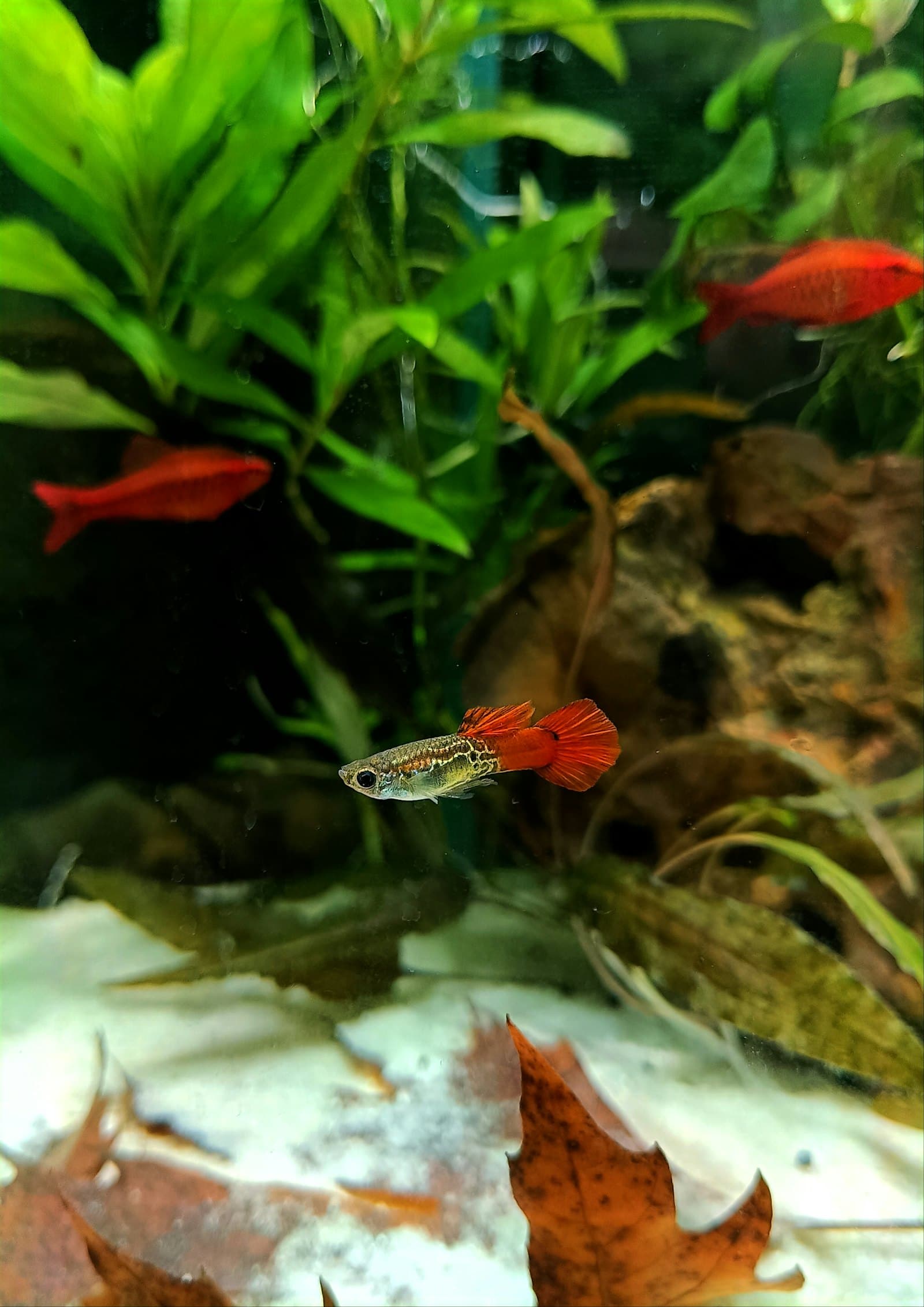
Recommended
Guppy Feeder Fish — 100 Pack
Captive-bred and quarantined before they ship — the low-risk way to feed live.
$104.99· $1.05/fish
Frequently asked questions
Are feeder fish really risky?
Cheap, vat-raised ones can be. Captive-bred, quarantined feeders carry far less risk — sourcing matters more than species.
How long should I quarantine new feeders?
At least a week in a separate tank, watching for spots, clamped fins, or wasting before they reach your display.
How do I prevent ich?
Reduce stress, keep water stable, quarantine new fish, and treat at the first sign of spots.
Ready to stock up?
Healthy, gut-loaded guppy feeders in bulk packs and bi-weekly subscriptions — live arrival guaranteed.
Questions about this guide? Email [email protected]