Why Guppies Are the Best Feeder Fish for Predatory Species
Goldfish and rosy reds get all the attention, but guppies are the safer, more nutritious, and more sustainable feeder choice. Here is the case for switching.
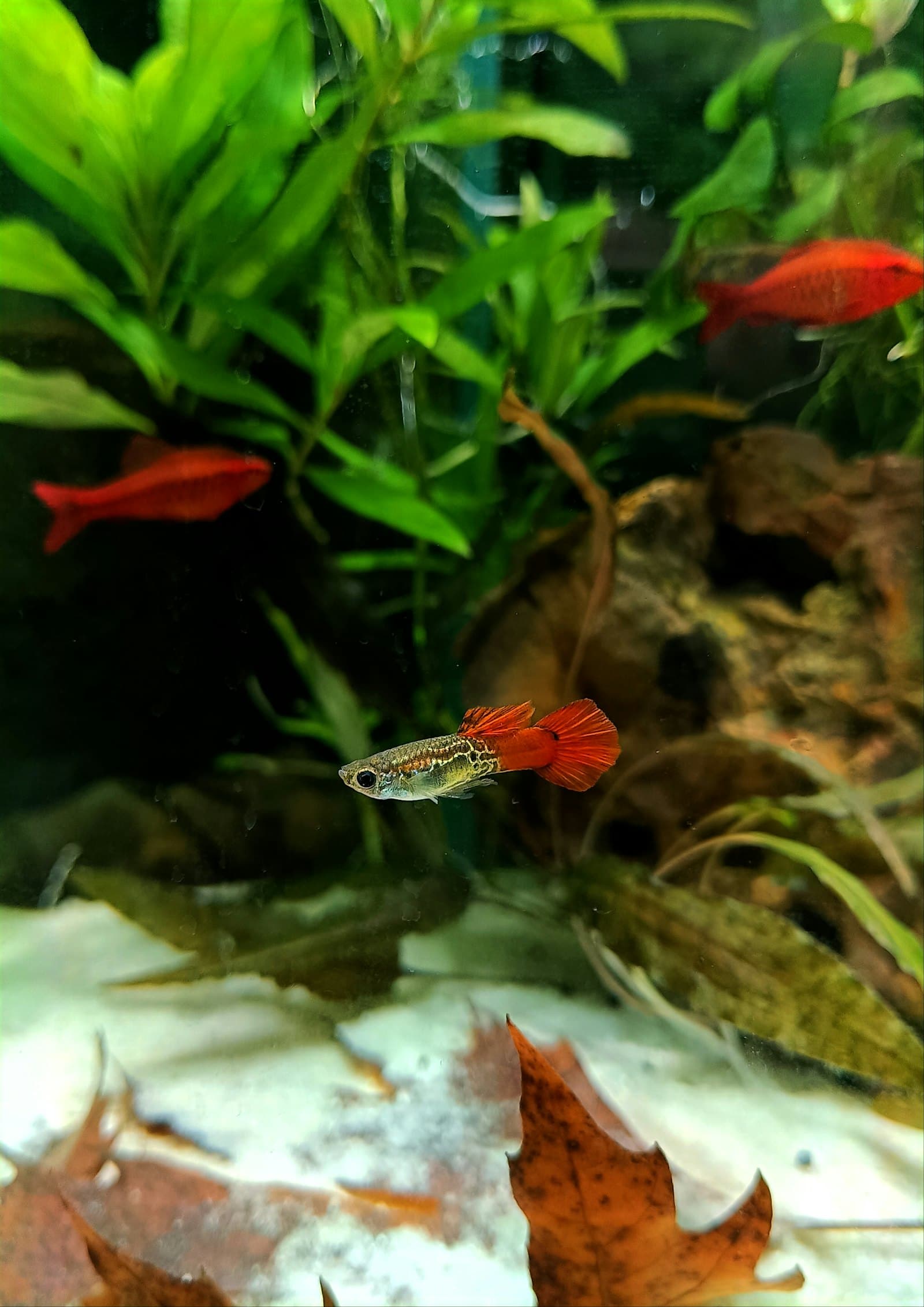
If you keep predatory fish, you have probably defaulted to comet goldfish or rosy red minnows as feeders simply because that is what the local store stocks. But for most freshwater predators, guppies are a measurably better choice — nutritionally, behaviorally, and from a fish-health standpoint.
99.3%
Live arrival rate
500k+
Healthy feeders shipped
$0.70
Per fish in bulk
The thiaminase problem with goldfish
Goldfish and other cyprinids contain high levels of thiaminase, an enzyme that breaks down vitamin B1 (thiamine). Fed as a staple, they can cause a thiamine deficiency that leads to neurological problems, loss of appetite, and even death in predators. Guppies are livebearers, not cyprinids, and are far lower in thiaminase — making them a much safer long-term staple.
The science bit
Thiaminase-driven vitamin B1 deficiency is a well-documented cause of decline in predators fed goldfish or rosy reds long-term. Switching the staple to a low-thiaminase feeder like guppies removes that risk.
A better nutritional profile
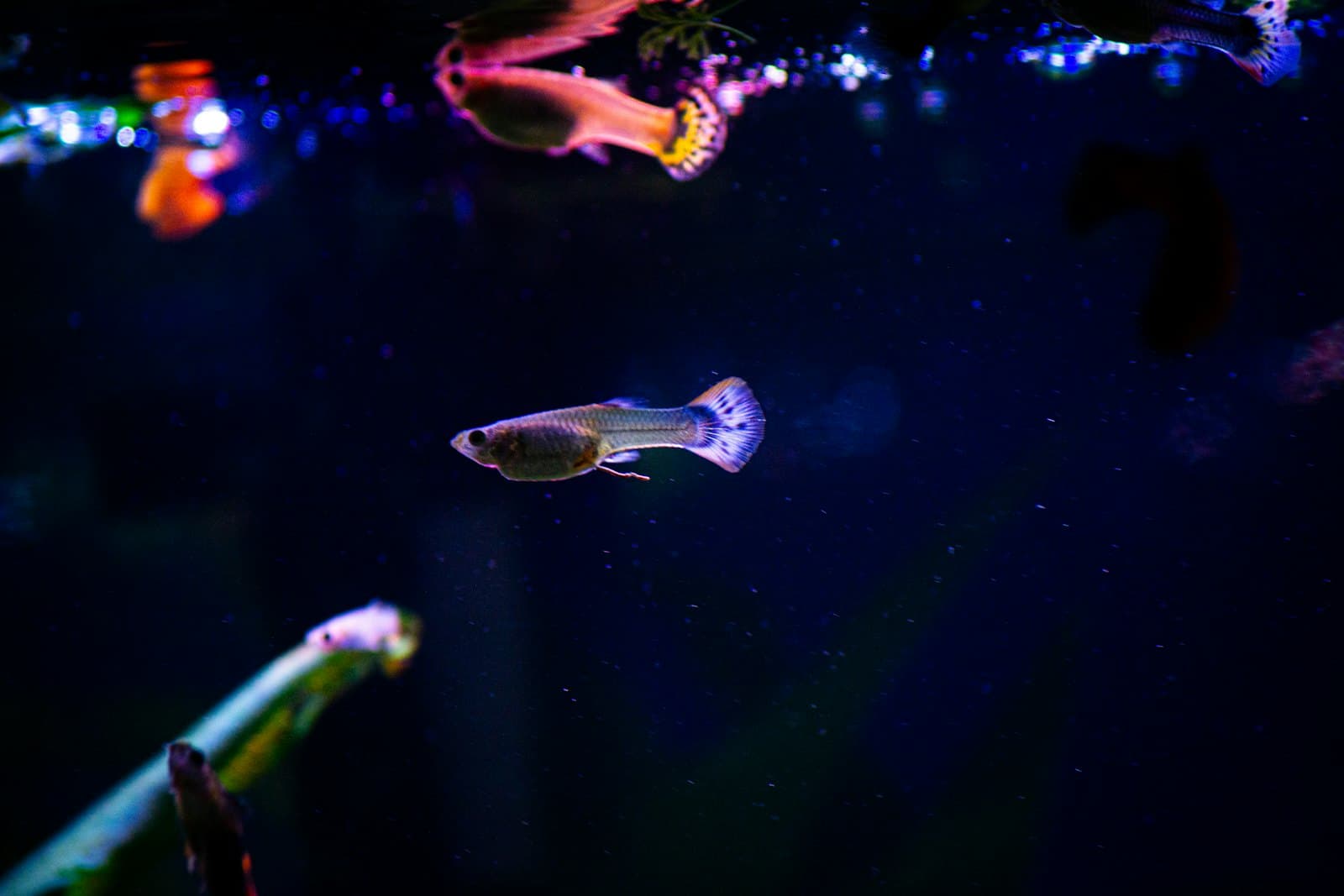
Guppies are small, soft-boned, and easy to digest. Because they are small you can feed several at once, which lets your predator express natural hunting behavior repeatedly instead of swallowing one oversized meal. When gut-loaded, guppies become a delivery vehicle for the nutrition you actually want your predator to receive.
Disease risk and sourcing
The biggest danger with feeder fish is not the species — it is the source. Cheap feeders are often kept in overcrowded, under-filtered vats and arrive loaded with parasites and bacterial infections. The fix is to buy captive-bred feeders from a hatchery that quarantines and conditions its stock. That is exactly how we raise every guppy we ship.
- Lower thiaminase than goldfish or rosy reds
- Small size encourages repeated, natural hunting behavior
- Easy to gut-load for targeted nutrition
- Captive-bred stock means far lower disease risk
- Readily available year-round in consistent sizes
Guppies are kinder to your wallet too
See your monthly and yearly feeder cost — and how much bulk pricing saves versus store runs.
What does feeding really cost?
Estimate your monthly and yearly live-food bill.
Size
Estimated live-food spend
18
feeders / week
$55.44
per month
$673.90
per year
At our best subscription price of $0.72/fish.
Buying tiny store packs instead would cost about $92.40/month — so ordering in bulk saves you roughly $449.30 a year.
Which predators do best on guppies?
Guppies are an excellent match for pea puffers, leaf fish, smaller cichlids, juvenile arowana and gar, knifefish, larger bettas, pipefish, and many reptiles and amphibians such as turtles and axolotls. For very large predators, use guppies as a supplement or grow them out first in a holding tank.

The goal of a feeder is to be a clean, nutritious, appropriately sized meal. On every one of those measures, a well-raised guppy beats a bargain-bin goldfish.
Recommended
Guppy Feeder Fish — 100 Pack
Captive-bred, gut-loaded, and quarantined — the safer staple for your predators.
$104.99· $1.05/fish
Frequently asked questions
Are guppies better feeders than goldfish?
For most predators, yes — they are lower in thiaminase, easier to digest, and easier to gut-load. Goldfish fed as a staple risk vitamin B1 deficiency.
Are feeder guppies safe?
When captive-bred and quarantined, very safe. The risk comes from cheap, vat-raised feeders, not the species.
What predators can eat guppies?
Puffers, leaf fish, cichlids, juvenile arowana and gar, knifefish, bettas, turtles, axolotls, and more.
Ready to stock up?
Healthy, gut-loaded guppy feeders in bulk packs and bi-weekly subscriptions — live arrival guaranteed.
Questions about this guide? Email [email protected]